
Aerospace & defense · Manufacturing intelligence
Manufacturing Intelligence Platform: How defense contractors get capacity back from rework
Defense contractors are being asked to build 10 to 20 times faster, but they can’t hire their way to that rate. Most plants already have the capacity they need; they’re losing it to errors and rework. This guide explains what a manufacturing intelligence platform is and how defense manufacturers use one to recover that capacity.

Definition
A manufacturing intelligence platform is software that automatically guides, checks, and records each production step at the work cell, so errors are caught before the part moves to the next operation. Rapta’s AI SuperCoach is one such platform. It combines digital work instructions, powerful AI inspection models, and automatic data capture at each station. Aerospace and defense manufacturers use it to recover capacity lost to rework, improve first-pass yield, and keep a photo record of every step for AS9100 and ISO 9001 audits.
What is a manufacturing intelligence platform?
Manufacturing intelligence used to mean reporting. You pulled data from your MES, ERP, and historian, built dashboards, and found out on Monday what went wrong last week.
A manufacturing intelligence platform works at the station instead. It walks the operator through each step, checks the work with AI inspection models before the next step starts, and records the serial number, work order, tool data, and a photo of the finished step. That data then goes to your manufacturing execution system (MES) and enterprise resource planning (ERP) system, so planners and quality engineers see it without anyone retyping it.
Why aerospace and defense manufacturers need a manufacturing intelligence platform now
Ask anyone running a defense program what’s holding back a rate increase, and you’ll hear about people, suppliers, and schedule. A new hire takes years to become fully productive. A new building takes longer.
Rework is different. It’s capacity you already own, spent building the same thing twice.
“In many of the facilities that both [Rapta Co-Founder & CMO Matthew Thornton] and I worked in, we saw factories losing 30 to 50% of their capacity to rework and to quality problems that were entirely avoidable.”
Aaron Brown, Co-Founder & CEO, Rapta
Most plants have never measured that loss because it’s buried in hours they already pay for. Getting it back is how Rapta customers add 30% or more capacity with the same people and the same floor space.
What does a manufacturing intelligence platform do?
Digital work instructions
Rapta replaces paper binders and static PDFs with short videos at the station, in whatever language the operator reads. These digital work instructions, sometimes called electronic work instructions (EWIs), get new operators up to speed as much as 10 times faster. One customer trained operators on a precision assembly in about 20 minutes, and nobody had to pull a senior technician off the line to do it.
AI quality inspection at the point of build
Most plants inspect at the end-of-line test. By then, a mistake made at step 4 can be buried under steps 5 through 250. Rapta checks each step at the station as the operator finishes it, using AI inspection models trained on the correct result. If something’s wrong, Rapta flags it and guides the operator through the fix before the part moves on.
Quality engineers will recognize this as poka-yoke, done in software rather than with fixtures. You’ll also see it called point-of-build inspection, in-process quality inspection, or AI assembly verification. The reason it matters is cost: a defect gets more expensive with every operation it survives.
“If I make a mistake in a simple part, let’s say inside an engine, the cost of fixing it in the factory could have been $1. The cost of fixing it in the field could be $10,000, or critically, it could be someone’s life at stake.”
Aaron Brown, Co-Founder & CEO, Rapta
Automatic data capture
Serial numbers, work orders, barcodes, RFID tags, and connected-tool readings are captured at the cell automatically. Optical character recognition (OCR) reads serials, wire labels, and date codes straight off the part, so operators aren’t typing them into a spreadsheet.
Manufacturing traceability and the digital traveler
Every step gets a photo tagged with the station, the operator, and the serial number. Together, those records make up a digital traveler (or electronic traveler). When a problem turns up months later, you can go straight to the step where it started.
Integration with MES and ERP
Rapta doesn’t replace your MES or ERP. It feeds them data from the cell that used to live on paper travelers and in spreadsheets.
On-premises and air-gapped manufacturing AI
Programs with data restrictions can run Rapta on-premises or fully air-gapped. Inference happens on industrial hardware at the work cell, and production images and build data stay in the facility, supporting ITAR compliance.
How does a manufacturing intelligence platform work at the work cell?
A typical build at a Rapta station goes like this:
- The operator scans the part, and Rapta pulls in the serial number and work order.
- The next step plays as a video on the screen or is projected onto the part.
- Cameras check the step as the operator finishes it.
- If the step is right, the next one unlocks. If it isn’t, the station flags it and the operator corrects the mistake.
- A photo of the completed step goes into the digital traveler.
- Quality and process data go to MES and ERP.
Rapta can be operational in weeks. Inspection models are built in a visual, no-code action builder, so there’s no custom inspection code to write. That custom code is usually what stretches a traditional machine vision project into months.
What are the benefits of a manufacturing intelligence platform?
For aerospace and defense manufacturers, the benefits show up in five places.
- Capacity goes up because less line time goes to rework.
- First-pass yield improves because defects are caught at the station that caused them.
- New operators get productive faster with video instructions in their own language.
- Audits get easier because every step already has a photo tied to a serial number.
- Programs with data restrictions can use AI without sending anything outside the facility, since the platform can run fully air-gapped to support ITAR compliance.
Manufacturing intelligence platform vs. MES, QMS, and traditional machine vision
MES, QMS, and machine vision all touch quality, so buyers often ask where a manufacturing intelligence platform fits. In practice, it covers the work cell, which the others mostly don’t.
| System | Primary job | Where it works | When it finds defects |
|---|---|---|---|
| Manufacturing intelligence platform | Guides, verifies, and records each assembly step | At the work cell, during the build | At the station, as the step is performed |
| Manufacturing execution system (MES) | Tracks work orders, routing, and work in process | Plant and line level | Depends on data entered by operators or other systems |
| Quality management system (QMS) | Logs nonconformities and runs corrective action, document control, and audits | Quality department | After a defect is reported |
| Traditional machine vision | Rule-based inspection of one fixed part and lighting condition | At one fixed inspection point | Only at that point, against preset pass/fail rules |
AI for defense manufacturing: customer results
One defense supplier was walking a group of major defense contractors through its floor when Rapta flagged a critical defect in front of everyone. That single catch was worth $239,000 and paid for the system on the spot.
A Department of War (DoW) prime contractor reached full ROI in two months and hit its Full Rate Production milestone three months ahead of schedule. Outside defense, precision instrument maker Shimadzu USA MFG cut human inspection time by 54%, from 15 minutes to 7 minutes per unit. Rapta caught 23 potential defects during implementation, and the station saves 1,545 labor hours and more than $46,000 in direct labor a year.
Five of the top ten defense contractors have deployed Rapta.
“Aerospace and defense companies are facing massive challenges scaling to meet the demands of this nation. They need to build products faster, sometimes 10 to 20 times faster. They don’t have the people to do that, and they don’t have the supply chain in place. So Rapta’s role is making sure the people they do have are utilized to 110%.”
Aaron Brown, Co-Founder & CEO, Rapta
How does AI quality inspection hold up in an AS9100 audit?
Auditors want proof of how each part was built, not just proof that it passed final inspection.
“You get photographic evidence of every single step, and you can trace the issue directly to the individual step and solve your problem.”
Matthew Thornton, Co-Founder & CMO, Rapta
In a long supply chain, finding the root cause usually means interviewing people and digging through paperwork. With a photo of every step tied to a serial number, you look it up. AS9100 and ISO 9001 auditors, Defense Contract Management Agency (DCMA) reviewers, and your own supplier-quality team get the evidence they ask for, and nobody has to pull it together after the fact.
On classified or ITAR-controlled programs, the whole system can run air-gapped, so those records never leave the building.
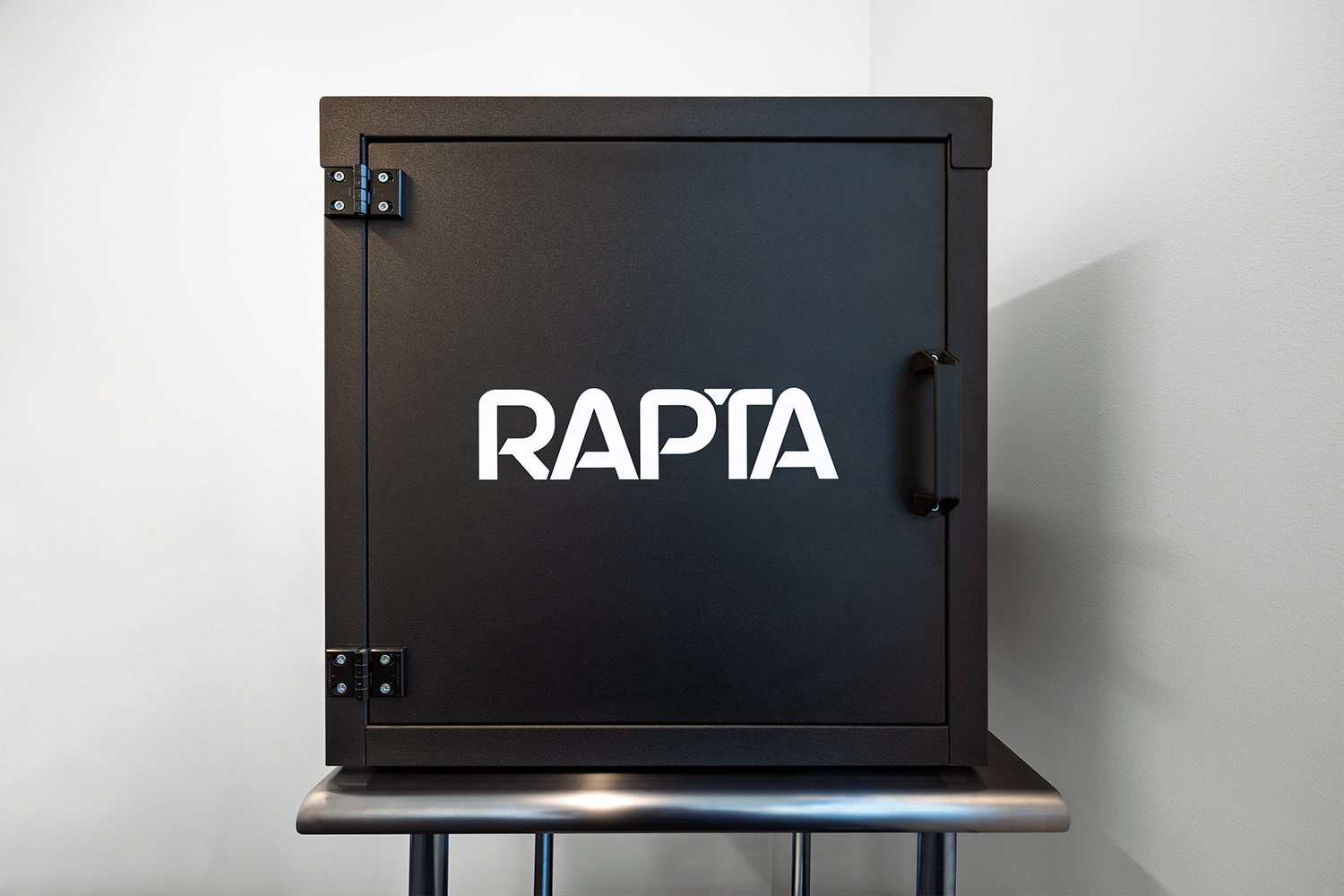
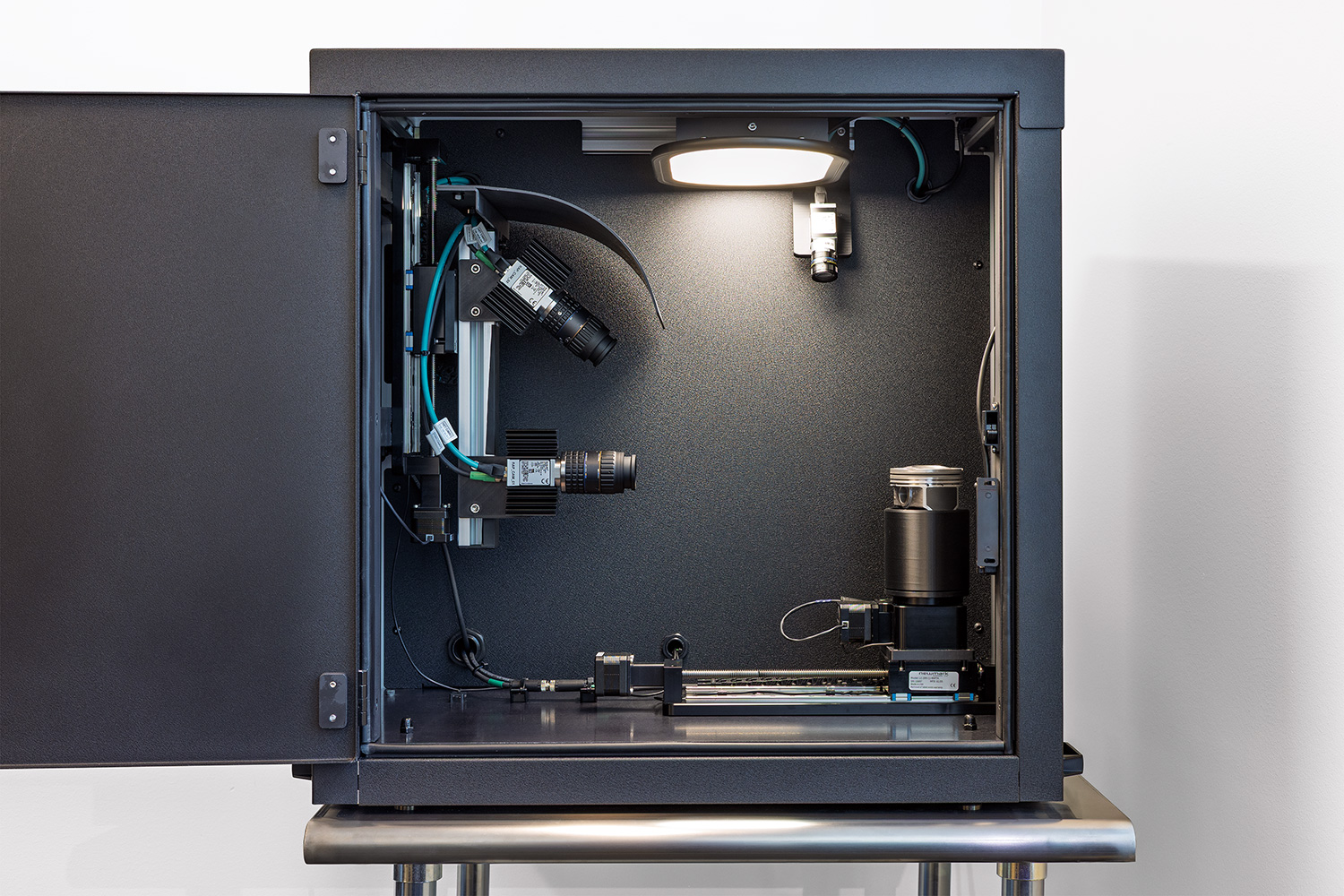
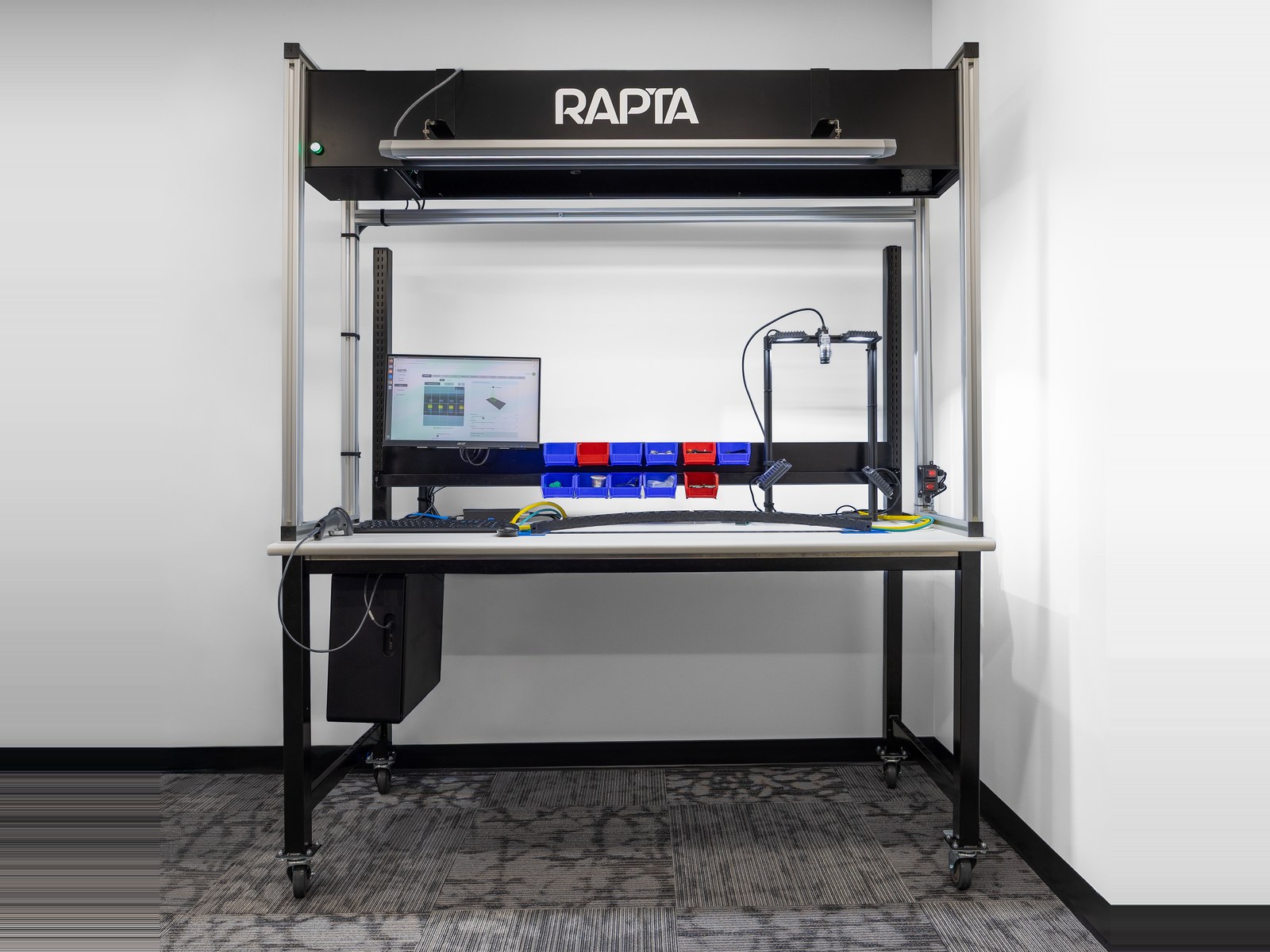
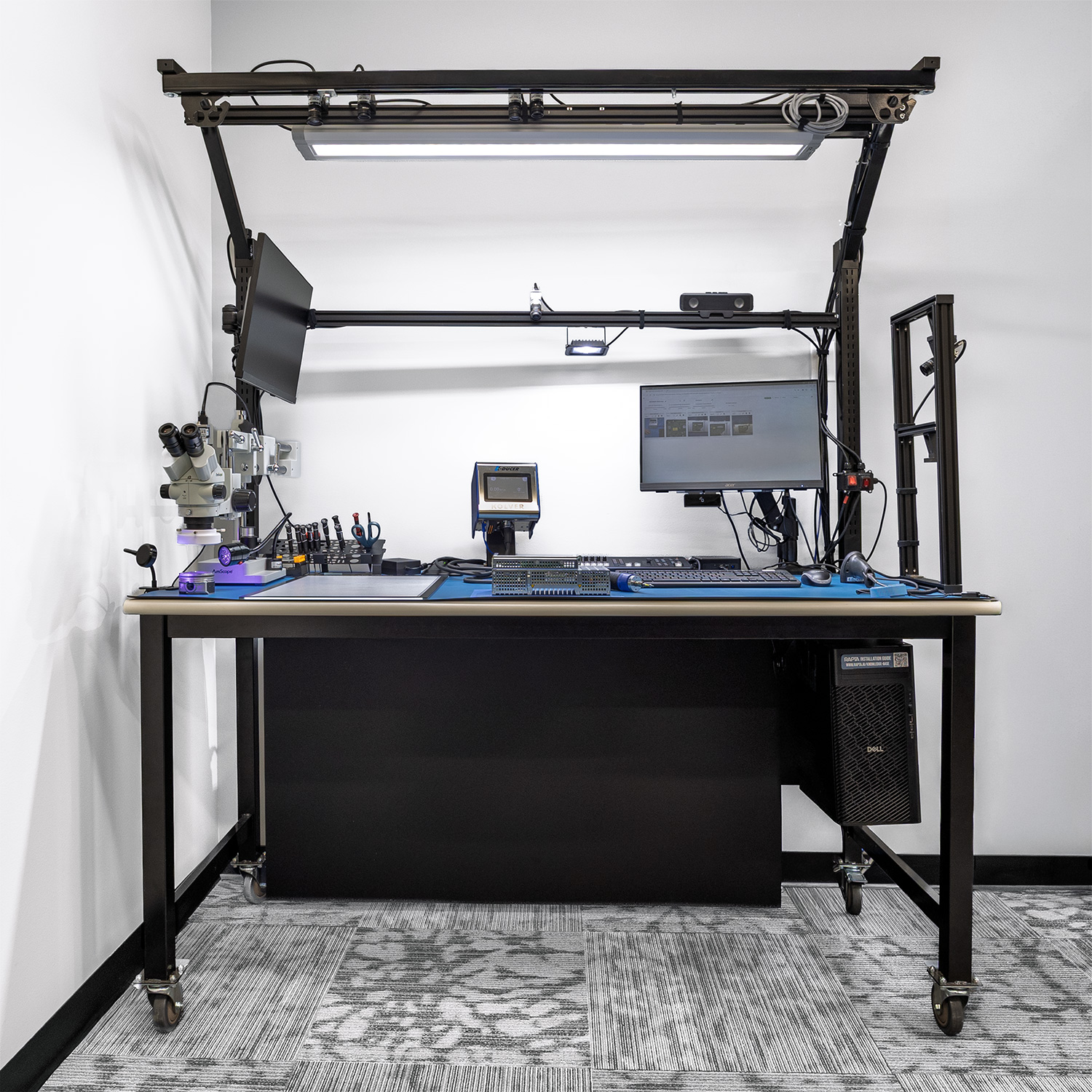
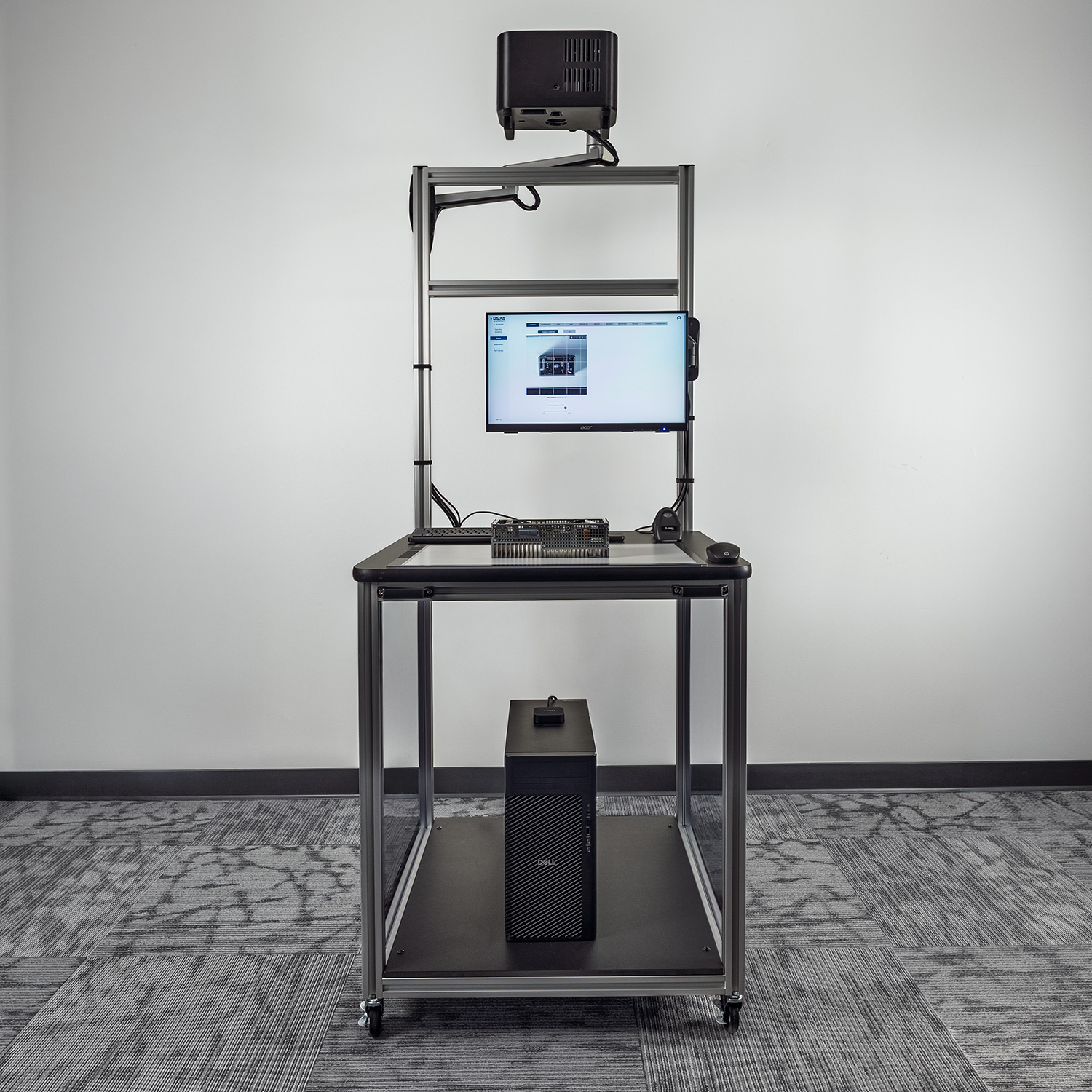
Rapta work cells
Rapta’s manufacturing intelligence platform is compatible with nearly any work cell configuration. Below are four examples, so you can match the hardware to the station you already have.
What manufacturers measure in the first year
Customers have reported these results in the first year after deploying Rapta’s manufacturing intelligence platform.
| Metric | Result |
|---|---|
| Added capacity, same footprint | 30%+ (30–50% where rework was the constraint) |
| Manufacturing error reduction | 90%+ |
| Single defect caught live during a defense contractor tour | $239,000 |
| Time to full ROI, DoW contractor | 2 months; Full Rate Production milestone 3 months early |
| Shimadzu USA MFG | 54% less human inspection time, 23 potential defects prevented, 1,545 labor hours and $46,000+ saved a year |
| Operator training speed | Up to 10x faster, any language |
| Deployment | Operational in weeks; on-premises or air-gapped |
How to evaluate a manufacturing intelligence platform
If you’re comparing vendors, these are the questions worth asking:
- Does it check each step at the station, or only sample at the end of the line?
- How long will setup take? With a no-code builder, it should be weeks, not months.
- Can it run air-gapped? You’ll need that for classified, CMMC-regulated, and ITAR-controlled work.
- Is every step photographed and tied to a serial number, station, and operator?
- Will it send data to your MES and ERP?
- Does the hardware fit your stations, whether that’s a fixed bench, a mobile cart, or an enclosed inspection cell?
- Does it support operators in their own language, or is it trying to replace them?
- Will the vendor build the payback case from your own quality and throughput numbers?
Book a demo on your own process
Demos take 30 minutes and use your build. Bring one step that keeps getting reworked and one defect that keeps showing up at the end-of-line test. We’ll walk through the work instruction, the in-process check, and the traceability record, and you’ll leave with first-pass yield and rework numbers for your own line.
Book a Rapta demoRapta Inc. is headquartered in Lake Oswego, Oregon. Quotes are from an interview with Aaron Brown, Co-Founder & CEO, and Matthew Thornton, Co-Founder & CMO. Metrics are customer-reported or drawn from published Rapta case studies.