
See What Standard
Inspection Cannot.
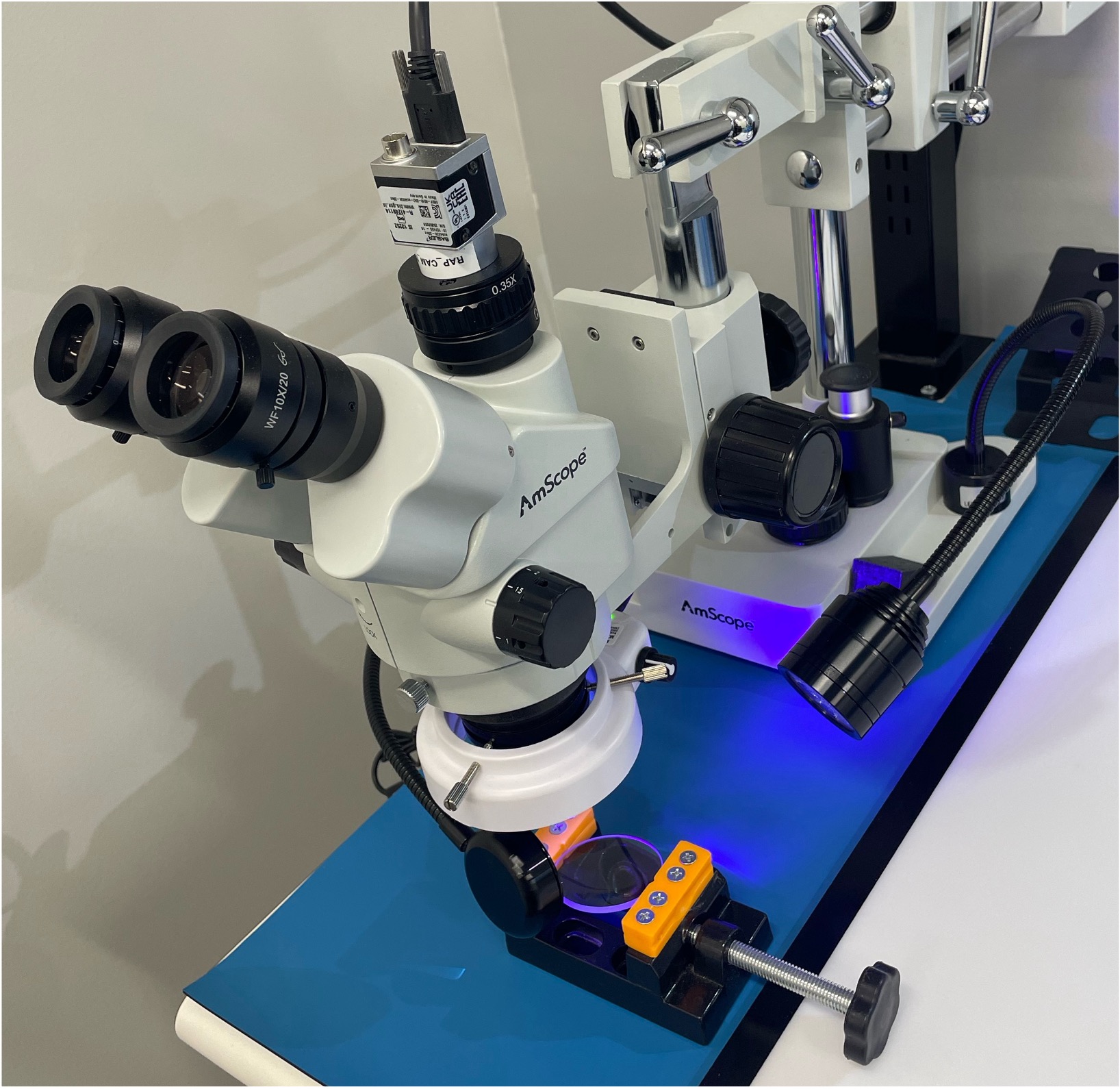
AI-powered FOD inspection using UV, near-UV (black light), visible, RGB, and infrared wavelengths — engineered to illuminate contamination that hides in plain sight.
Different Defects Demand Different Light
Not all foreign object debris responds to white light. Fingerprint oils, microscopic particles, surface scratches, and optical coatings each absorb and fluoresce at distinct wavelengths. Matching the right wavelength to the right defect type is what makes contamination visible — and detectable by AI.
- UV & Near-UV (Black Light) — forces fluorescence in fingerprints, oils, and organic particles invisible under white light
- Infrared — penetrates surface coatings to reveal sub-surface contamination and thermal anomalies
- Visible & RGB — high-fidelity color discrimination for particles, coatings, and surface anomalies
- Multi-spectrum fusion — AI models trained across all wavelengths for comprehensive coverage
One Platform. Every Spectrum.
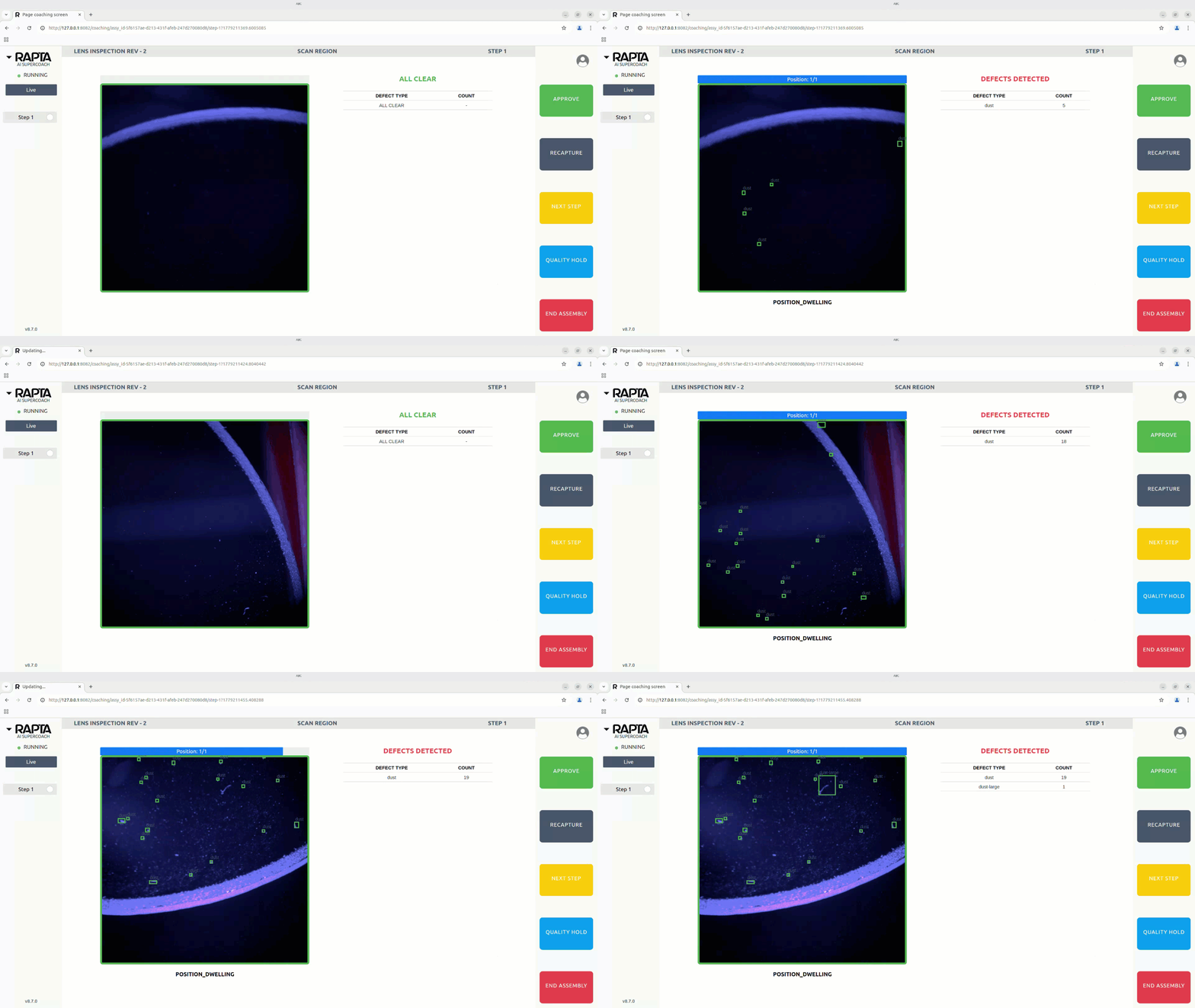
Rapta’s AI models are trained and validated across the full range of inspection-relevant wavelengths — from thermal infrared to UV and near-UV (black light).
Infrared
Sub-surface contamination, thermal anomalies, and material composition detection beneath visible coatings.
Visible Light
Standard white-light inspection for gross contamination, surface damage, and particulate presence.
RGB Imaging
Full-color AI discrimination between particle types, coating variations, and surface finish anomalies.
Near-UV / Black Light
Reveals fluorescent contamination invisible to the human eye — oils, adhesives, biological residue.
Every Class of FOD.
Rapta AI models are trained to identify the full spectrum of foreign object debris relevant to precision optical and defense assemblies.
Fingerprints & Skin Oils
Oils deposited by skin contact are transparent under white light but fluoresce vividly under UV and near-UV illumination, making them trivial to detect with the right wavelength.
Dust & Particulate Matter
Micron-scale airborne particles that settle on optical surfaces, causing scattering and image degradation in assembled optics and sensor arrays.
Surface Scratches & Micro-Abrasions
Fine scratches that interrupt optical coatings or glass surfaces are highlighted under raking UV illumination angles, enabling AI detection at sub-pixel scale.
Foreign Particles & Debris
Manufacturing residue, adhesive flakes, metal fragments, and fiber contamination — each class illuminated differently under the optimal wavelength for that material type.
Optical Lens FOD Inspection
Precision optics demand zero contamination tolerance. UV inspection detects contamination at every stage of the assembly lifecycle — before and after integration into the final product.
Pre-Assembly Inspection
Inspect bare lenses and optical elements before integration. UV illumination reveals contamination that would degrade system performance post-assembly — eliminating rework and scrap at the source.
- Individual element-level FOD clearance
- Pre-coating and post-coating verification
- Full digital traceability per lens serial number
Post-Assembly Final Inspection
The most critical challenge: detecting FOD in the final assembled state, through housing apertures and access points. Rapta is engineered to illuminate and detect contamination in the configuration it will be fielded — no disassembly required.
- Inspection through assembly apertures & ports
- UV illumination optimized for final-state access
- Factory Acceptance Test (FAT) documentation
The critical requirement: FOD must be detectable and illuminated effectively in the final assembled state. Rapta’s flexible multi-spectrum approach is designed precisely for this constraint — ensuring inspection is possible without compromising assembly integrity.
Multi-Spectrum Inspection Workflow
Configure Wavelength
Select UV, near-UV (black light), infrared, visible, or RGB — or combine multiple spectrums for layered detection coverage.
Illuminate & Capture
UV and multi-spectrum lighting causes contamination to fluoresce. Rapta captures high-resolution imagery under the selected illumination condition.
AI Detects FOD
Deep learning models classify and locate each defect type in real time — fingerprints, particles, scratches, and debris.
Trace & Document
Every inspection generates a digital record with full video traceability, defect annotations, and pass/fail documentation for FAT and quality audit.
Ready to Eliminate
FOD at Every Stage?
See how Rapta’s multi-spectrum AI platform delivers the contamination detection your assemblies demand — from bare optics to final system inspection.
Get a Demo