
The Hidden Cost of
Missed FOD in Defense Optics
A single fingerprint. A particle smaller than a grain of sand. A micro-scratch invisible under white light. In a commercial product, these are nuisances. In a defense optical system, they are mission failures waiting to happen.
FOD in precision optical assemblies — targeting systems, imaging sensors, laser rangefinders, night vision optics — doesn’t just degrade performance. It triggers costly rework cycles, delays Factory Acceptance Tests, and in worst cases, escapes into fielded systems. The reason isn’t process discipline. It’s physics: standard white-light inspection simply cannot see everything.
What “Passed Inspection” Actually Means Under White Light
White-light inspection catches gross contamination — visible dust, obvious particles, large debris. For precision defense optics, that’s not enough.
Fingerprint oils are optically transparent under white light. Sub-micron particles disappear against coated surfaces. Fine scratches on optical glass are nearly invisible under direct illumination. These aren’t edge cases — they’re the most common FOD types in precision optical assemblies, and they’re routinely missed even by experienced operators following rigorous procedures.
A system that passes inspection on the bench can still fail in the field.
The Cost Escalation Curve
The further down the delivery chain FOD escapes, the more expensive it becomes — by an order of magnitude at each stage.
During manufacturing
Factory Acceptance Test
Post-deployment
Why Post-Assembly Inspection Is the Hardest Problem
The most dangerous point in the lifecycle isn’t bare lens inspection — it’s after the system is assembled. Access is limited to apertures and ports. Illumination angles are constrained. Contamination sources have multiplied with every handling step. And this is the last opportunity to catch FOD before it ships.
Standard inspection was not designed for this constraint. It was designed for open, accessible surfaces under controlled illumination — not for looking through a 20mm aperture into an assembled targeting system.
Different Defects Require Different Light
This is the fundamental physics problem that single-spectrum inspection ignores. Not all FOD responds to the same wavelength.
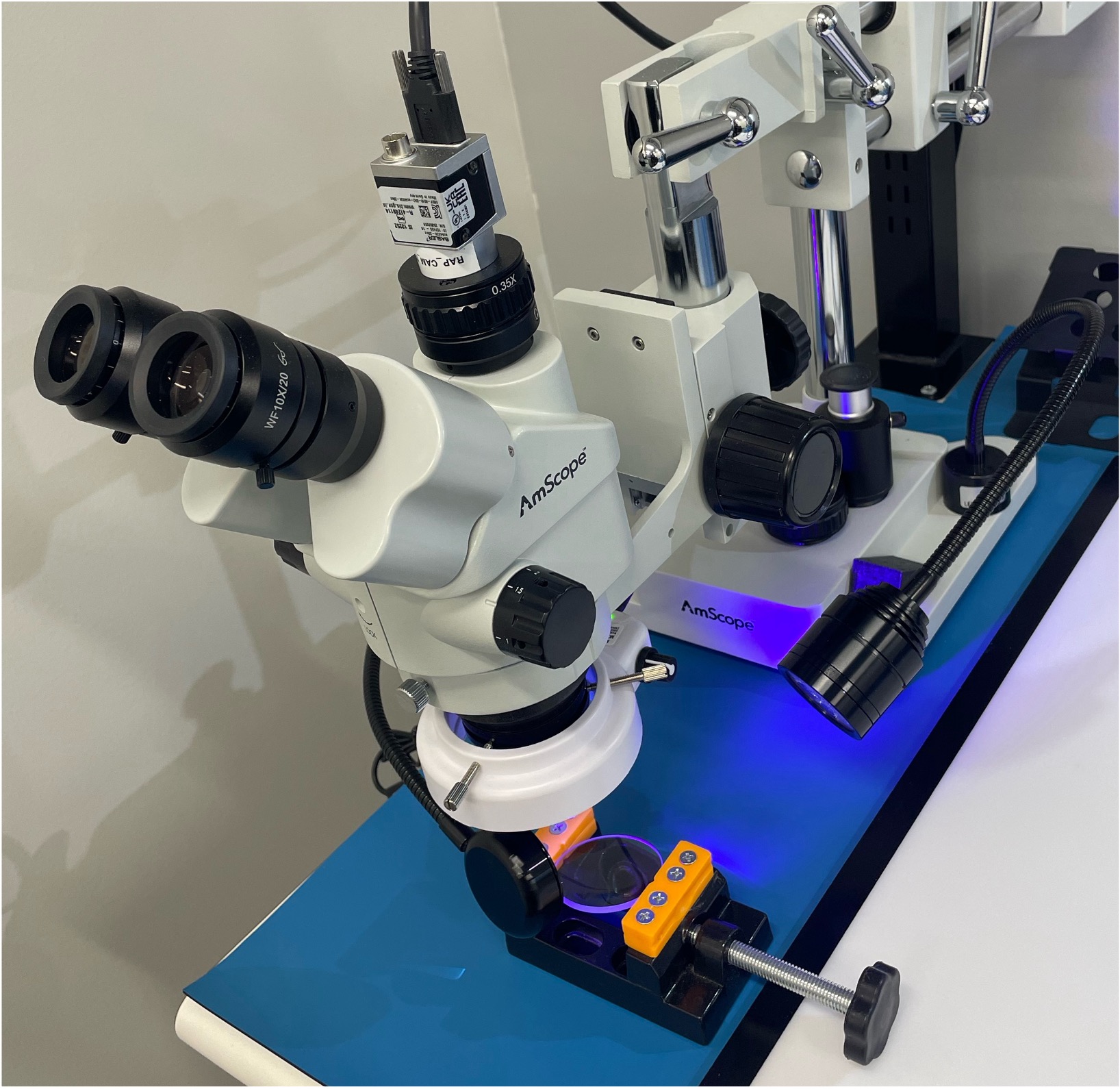
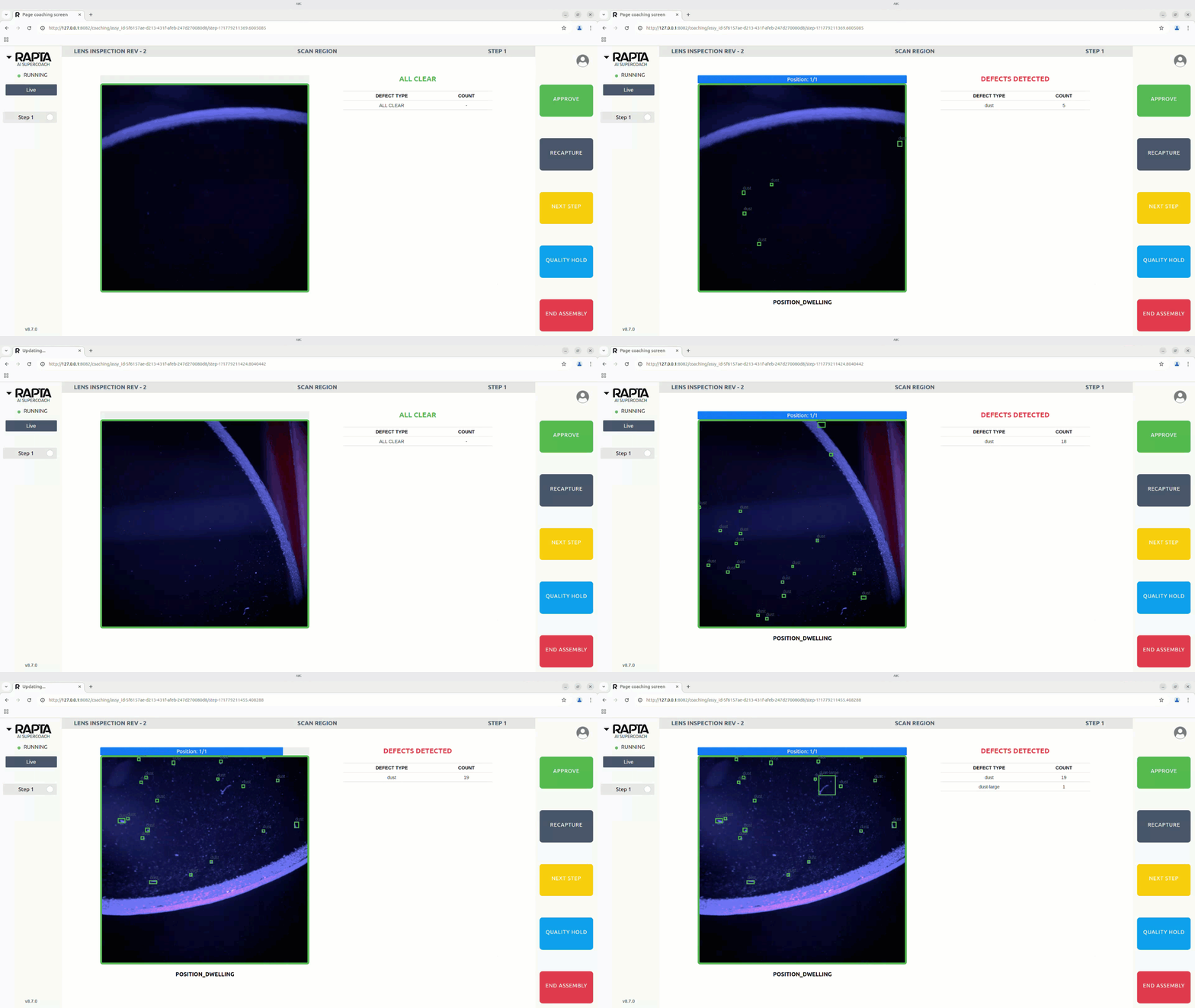
- UV & Near-UV (Black Light) Fingerprints and organic oils fluoresce vividly — what’s invisible under white light glows under UV.
- Infrared Penetrates surface coatings to reveal sub-surface contamination and thermal anomalies.
- RGB Imaging Color discrimination between particle types, coating variations, and surface finish anomalies.
- Visible Light Gross contamination, surface damage, and particulate presence under standard illumination.
A single-spectrum inspection strategy will always have blind spots. Comprehensive FOD detection means matching illumination to the defect — across every relevant wavelength.
What Zero FOD Escapes Actually Requires
Meeting zero-escape standards for precision optical assemblies requires inspection at every stage, the right wavelength for each defect type, AI detection that doesn’t fatigue, and digital traceability that satisfies FAT documentation requirements.
The physics of contamination doesn’t negotiate with inspection procedures. Fingerprint oils don’t fluoresce under white light regardless of how rigorous the protocol. The only way to reliably detect what white light can’t see is to use a different light — and AI models trained to recognize what that light reveals.
Rapta’s Manufacturing Intelligence Platform delivers AI-powered multi-spectrum FOD inspection for defense optics and precision assemblies — from bare element inspection through post-assembly final acceptance.
See How It Works →